

Working near overhead lines
When carrying out any type of work near power lines, treat the lines as live at all times.
It’s important to keep yourself and any equipment you’re using – such as ladders, gardening tools, rollers and scissor lifts – at least 4 metres away from the overhead lines to help stay safe. This is because electricity can jump through the air to your equipment and to you.
Getting too close to power lines can cause serious injury and death. Troy Hall suffered life-long injuries after he worked too close to power lines. Watch his story here.
If you must work near power lines, you should have a designated observer who can watch out for any potential hazards and help keep you and your equipment well clear of the power lines.
If you’re needing to work within 4m of overhead lines, you’ll need a close approach consent. We’ll send someone to assess your site, inform you of safety requirements of working near the lines and other electrical equipment, and issue the permit to do the work near our assets.
Service lines - power lines on your property
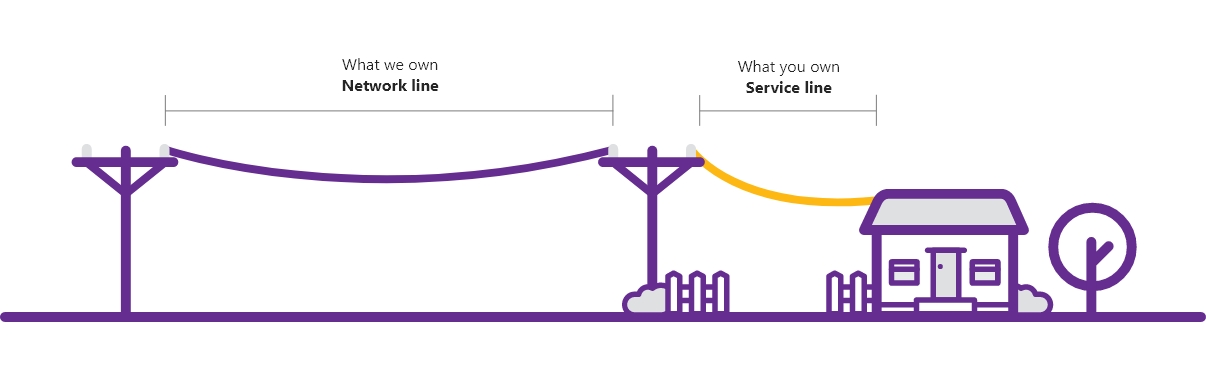
Property owners are responsible for the overhead service line or underground cable that gets power from the boundary of the property (or other point of supply) to the power meter.
It’s your responsibility to maintain your service line or cable.
Frayed or sagging lines break easily, especially in high winds. You or your animals could be seriously injured or killed if your overhead service line falls.
To help stay safe, property owners should regularly visually check their service lines to see if anything has changed, eg sagging line. Check the point where the service line enters your house – is the line old, repaired or frayed?
Electricity lines can be dangerous, so don’t get too close or touch.
If you’re concerned about the condition of your service line and connection, or the supporting poles and crossarms, on your property, please contact a suitably qualified professional to assess the condition of your service line and any need for repair.
Trees near your service line
You’re responsible for keeping trees clear of your service line.
Working near power lines is dangerous, so you must arrange for an approved contractor to trim trees within 4m of your service line.
Contact your retailer (the company you pay your power bill to) to arrange for a free temporary disconnection so your contractor can work safely. Your retailer will need at least 24 hours' notice.
Temporary disconnections (isolations)
Arrange a temporary disconnection if you’re doing anything near a service line – that’s the line that connects a building to the pole on the roadside.
Contact your retailer (the company you pay your power bill to) to arrange your temporary disconnection. If your disconnection is during business hours, it will be free. Your retailer will need at least 24 hours notice.
Learn about the different types of disconnections you can have.
Look up!
Overhead power lines are part of our landscape, however, to stay safe, it’s important to look up, know where they are and avoid being complacent around them. Holding an object that’s touching a power line can cause serious injury or death. To help avoid harm, keep yourself and any equipment you’re using at least 4m from power lines. Learn what to do – and not do – to stay safe around power lines. It could save your life.
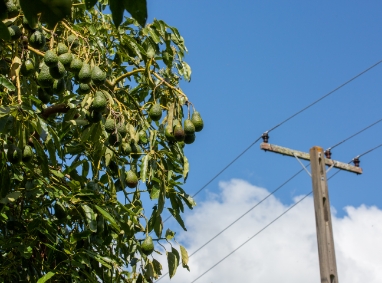
Don’t try to touch or retrieve anything touching a line such as kites, balloons, drones, tree branches or other wires. Call us 0800 769 372
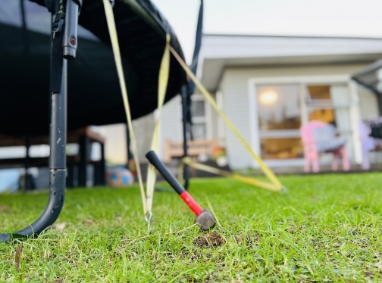
Tie trampolines down so they don’t blow into lines in high winds. Make sure tree forts, rope ladders and swings are only in trees that are a safe distance from lines.
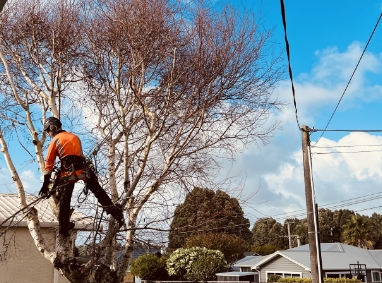
Use an approved contractor
If a tree is within 4m of a line, do not cut it yourself. To stay safe, you must use an approved contractor to have it trimmed.
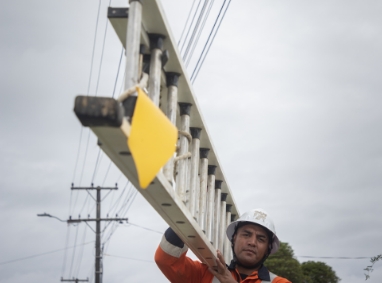
Check where lines are before raising equipment such as ladders, cherry pickers, tractors or truck beds. And lower lifting equipment before moving it. When moving tall machinery or vehicles, make sure you have at least 4m clearance under lines.
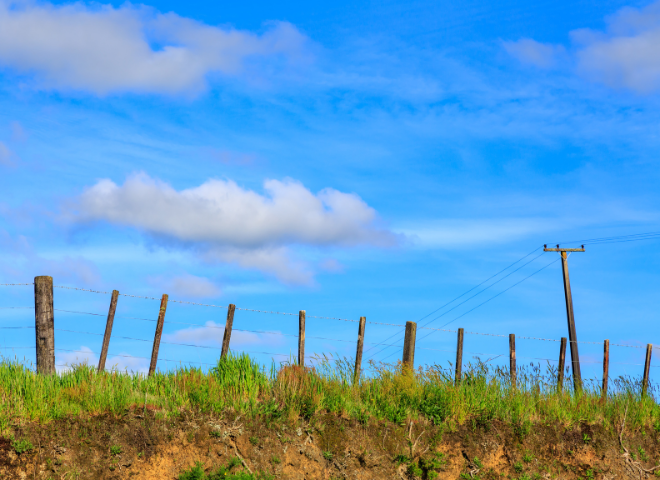
Erect wire farm fences away from overhead lines. People have been killed when fencing wire has snapped and flicked into lines.
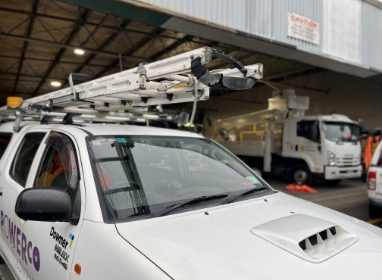
When moving tall machinery or vehicles, make sure you have at least 4m clearance under lines. Park vehicles and work clear of lines when on the upper levels of trucks or high loads, and keep flag poles, tent poles and boat mast well away from lines.
FAQs
Common DIY activities that can become dangerous near overhead lines include:
- Using ladders
- Trimming or cutting trees
- Cleaning gutters
- Painting houses or roofs
- Installing fences
- Carrying long materials such as timber, pipes or roofing iron
- Using scaffolding or elevated platforms
Also be aware of the height of the equipment you are using.
Before starting any DIY or outdoor project:
- Stop and look up
- Identify any overhead power lines or poles nearby
- Plan how you will safely keep yourself and equipment at least 4 metres away
- If you are unsure, contact a qualified professional.
If equipment, tools or materials come into contact with a power line:
- Stay calm
- Keep yourself and others away
- Do not attempt to remove the object
- Call 111 if there is immediate danger
- Call Powerco or your local lines company
- If you are in a vehicle or machinery that has contacted a line, stay inside if it is safe to do so until emergency services advise otherwise.

Look up!
Safety takes a moment. Consequences last a lifetime.
Look up and live - Watch the Troy Hall story